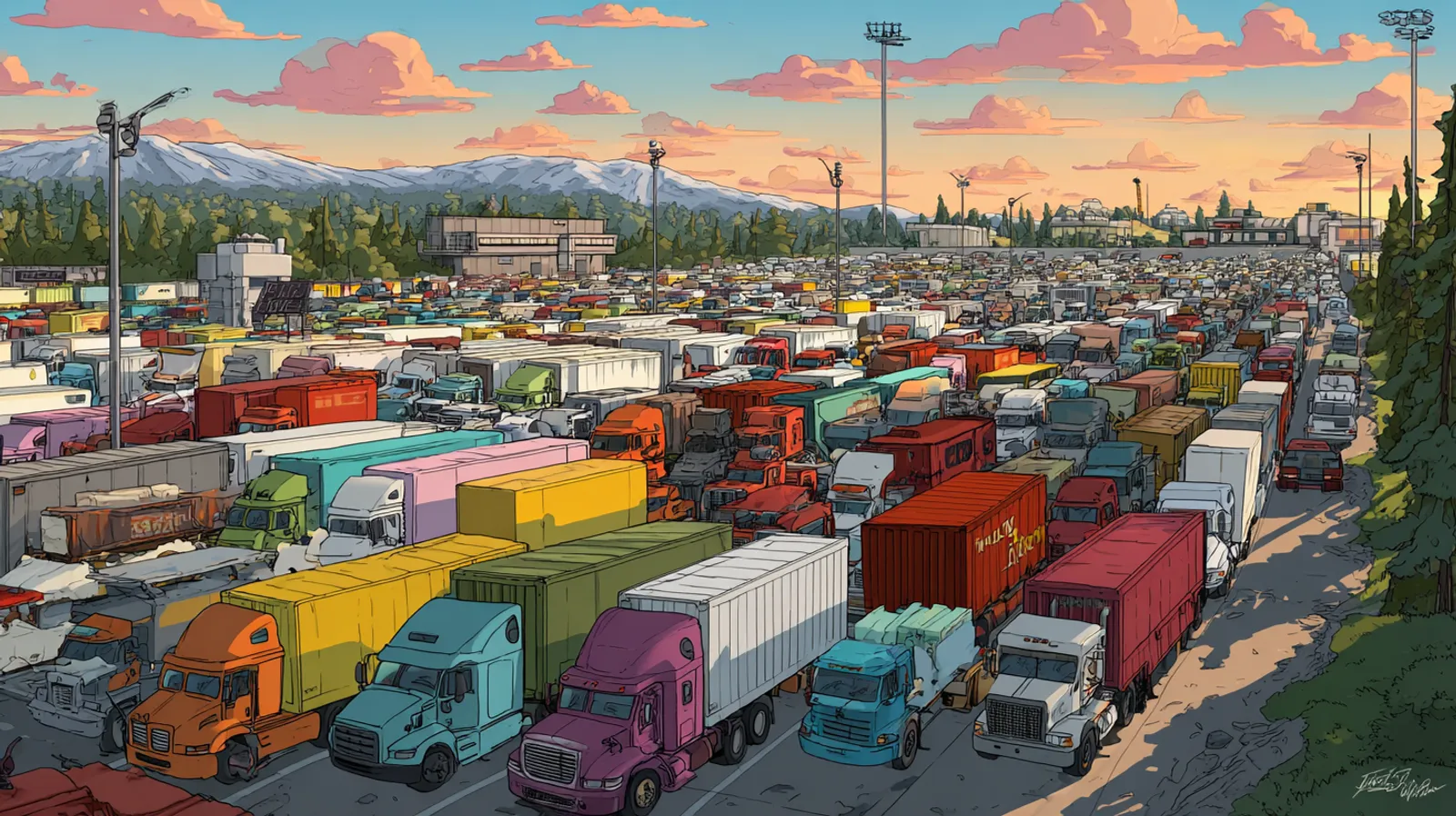
The I-35 corridor is plagued by a daily operational crisis that most shippers overlook: the severe shortage of safe, legal truck parking.
This isn’t just about driver comfort; it’s a structural failure that is contributing to a “race to the bottom” in compliance, directly increasing your supply chain risk and transportation costs. As the industry faces intense legal scrutiny regarding carrier vetting and liability (underscored by recent Supreme Court-bound cases), shippers need to understand how the parking deficit forces otherwise compliant carriers into precarious situations, pushing freight to the shadier, non-compliant end of the market.
The Hidden Cost of $82 Billion in Wasted Time Shippers understand that their freight rates are dictated by carrier efficiency. When capacity is tight—and all signs point to capacity slowly but persistently leaving the market—any systemic friction becomes instantly more expensive.
The parking shortage is perhaps the biggest hidden friction point:
Lost Productivity: Studies consistently show a truck driver loses nearly one full hour per day searching for safe, legal parking to satisfy federally mandated Hours-of-Service (HOS) rules. This wasted time contributes to an estimated $82 billion annually in lost productivity across the industry.
Forced Non-Compliance: When legal spots are unavailable in critical urban hubs (like DFW or Laredo), drivers face a choice: violate HOS rules or park illegally on highway shoulders and unsecured ramps. This increases the chance of fatigue-related accidents and exposes your cargo to theft.
This chronic friction makes compliant operations more expensive, creating a cost gap that is being dangerously filled by a new ecosystem of non-compliant players.
The Parking Deficit and the ‘Race to the Bottom’ The problem is exacerbated by the influx of capacity from entities utilizing highly questionable operating models. Recent reports highlight a surge in CDL fraud, manipulated Electronic Logging Devices (ELDs), and non-domiciled drivers who are willing to run harder and accept rates below sustainable operating costs.
How does the parking crisis fuel this disruption?
Ignoring the Clock: Compliant carriers must adhere to HOS rules and spend an hour searching for parking. Non-compliant carriers, leveraging manipulated ELDs, simply reset their hours or ignore the need for safe rest. They can take the loads compliant carriers cannot, undercutting their rates by as much as 40-50% on some lanes.
Unfair Competition: The parking shortage adds stress and cost to every legitimate carrier—be they Hispanic-American, Asian-American, or any U.S.-based fleet. They cannot compete fairly with the operations that bypass safety laws and driver welfare because of the stress of searching for safe parking. The result is that compliant carrier capacity is shrinking (as evidenced by venture-backed fleets and long-standing carriers consolidating or cutting back), leaving the door open for the high-risk, low-cost capacity.
The shipper who chooses the cheapest rate without rigorous vetting is now directly funding a market segment that operates outside of safety regulations, often relying on the scarcity of legal parking to cement their cost advantage.
The Liability Wake-Up Call for Shippers With state Attorneys General across the political spectrum arguing before the Supreme Court that freight brokers should not be protected from state-level negligence and safety torts, the liability spotlight is now shining intensely on the process of carrier selection and vetting.
When a carrier is forced to park illegally due to the I-35 deficit, or when a dispatcher manipulates ELDs to bypass HOS because they can’t find a spot, the risk of a severe incident increases dramatically. If that carrier was moving your freight, your broker (and potentially you) face greater scrutiny.
Actionable Mitigation: Secure Your Supply Chain The long-term solution lies in massive infrastructure investment (such as TxDOT expanding capacity and rolling out Truck Parking Availability Systems - TPAS). However, shippers must take immediate steps to protect their interests and support compliant capacity:
Be a “Shipper of Choice” with Your Facilities: The most powerful immediate action is to allow pre-approved, compliant carriers to utilize your private facilities for overnight or weekend rest parking, especially near dense urban areas where the shortage is acute. This small act is a massive driver retention boost and capacity incentive.
Vetting for Fatigue and Fraud: Go beyond basic insurance checks. Demand proof that your carriers utilize certified ELDs and ask for data showing their drivers aren’t being forced to operate outside of HOS rules. Prioritize carriers who utilize parking reservation technology.
Align Rates with Reality: Recognize that the true cost of operating safely includes the cost of that wasted hour of parking search and the need for fair driver compensation. Insisting on bottom-barrel rates increases the likelihood that your freight will be carried by the exact non-compliant operations that risk major accidents and liability.
By acknowledging that the I-35 parking deficit is a compliance risk, not just an inconvenience, shippers can proactively manage their liability, secure reliable capacity, and support the compliant carriers that are the backbone of the American supply chain.